What Transformations Change the Graph of F(X) to the Graph of G(X) F(X)=x^2 G(X)=(X+3)^2-7
Are you not my student and
has this helped y'all?
1-07 Transformations of Functions
Summary: In this section, you lot volition:
- Graph functions with translations.
- Graph functions with reflections.
- Graph functions with stretches and shrinks.
- Perform a sequences of transformations.

A flat mirror produces an epitome chosen a reflection where everything is inverted left to right. If the mirror is tilted, then the image tin can be shifted horizontally or vertically. If the mirror is bent like a funhouse mirror, then the image can be stretched or shrunk. These are all transformations. Mathematics tin cause the parents functions to transform in ways similar to the mirrors. This lets the functions describe real earth situations better.
Mathematicians tin transform a parent office to model a trouble scenario given every bit words, tables, graphs, or equations. This lesson looks at how to change a parent function into a similar function. These changes are transformations which change a graph'south position, orientation, or size. This lesson looks at transformations that change a graph horizontally or vertically. Because the x is the horizontal axis, to transform a graph horizontally, change the 10 values past addition or multiplication. Likewise, vertical transformations issue from changing the y values.
Translations
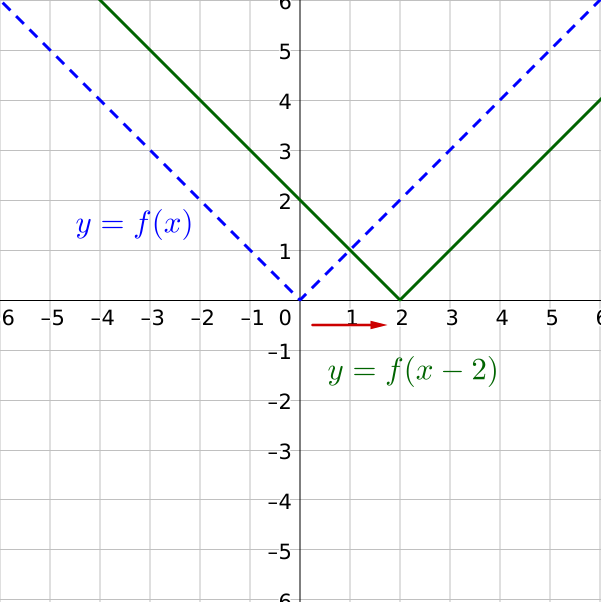
The beginning blazon of transformation is a translation. A translation moves a graph horizontally, vertically, or both. In general, if a part is written as
y = f(ten)
then horizontal translations are in the form
y = f(10 − h)
where h is the altitude the graph is translated to the right. In figure two, the part y = |x| is translated up right ii units. The new function would be y = |x − 2|.
Vertical translations are in the form
y = f(x) + yard
where k is the altitude the graph is translated up. In effigy 3, the function y = |x| is translated upward up two units. The new function would be y = |x| + 2.
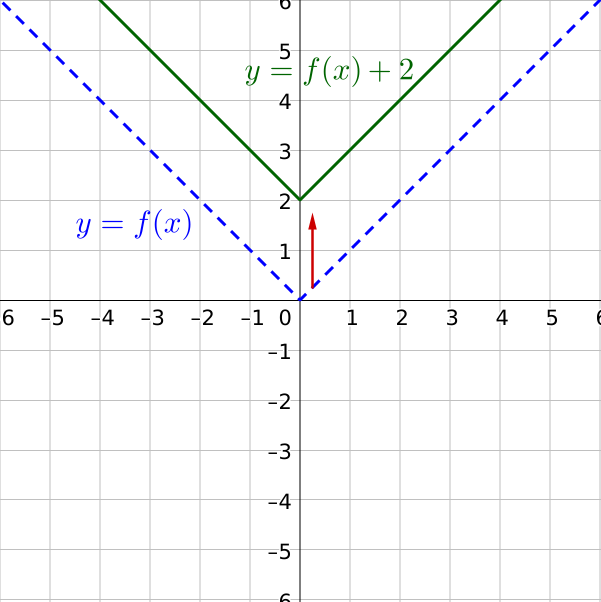
If h is negative, then it translates left, and if k is negative, then it translated downwards.
Notice that the number h is put inside the function with the 10 for a horizontal translation and then that the 10-value changes. The number one thousand is added outside to the entire function for a vertical shift because the function is y (y = f(x)) to change the y-value. If both h and yard are present then the graph translates both horizontally and vertically.
Translations
If the function is y = f(x), then translations are in the form
y = f(10 − h) + m
where the graph is translated h units correct and k units upwards.
Instance 1: Adding a Constant to a Function
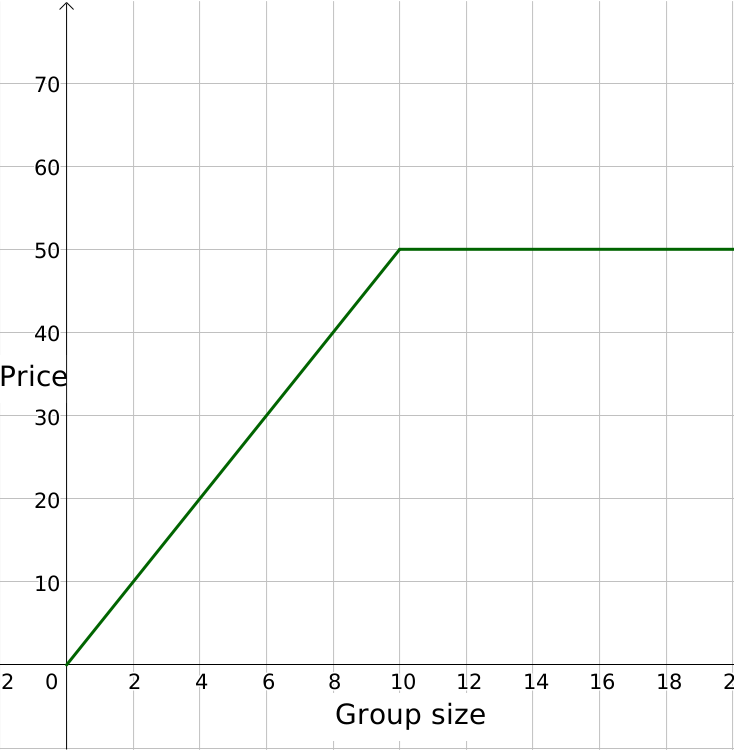
A small swimming puddle lets groups rent the pool for $five a person, but they but accuse for commencement ten people. Figure 4 is the graph of the full toll for groups. The manager would like to charge more to hire the pool, but people really similar the policy of only charging for the first x people. So, the manager starts charging a $xx cleaning fee in addition to the rent. Sketch a graph of the new price.
Solution
The graph can be sketched by adding 20 to each of the y-values of the original function. This will cause the graph to translate up 20 units.
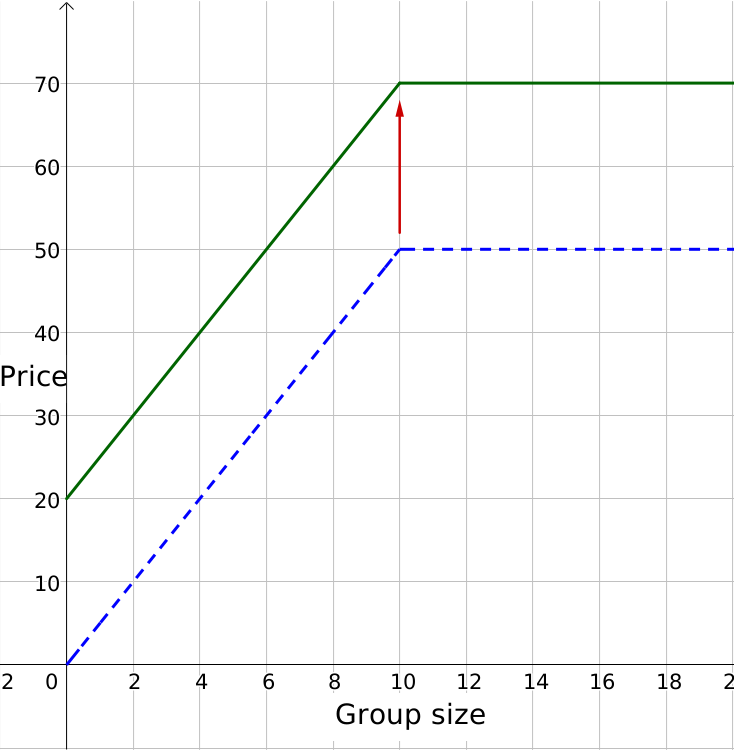
Notice in effigy 5, for each input x-value, the output y-value increased past 20. If the onetime function was y = f(x), so the new function would be y = f(x) + xx. Since the entire office = y, and so adding 20 to the part increases the y-values by xx. This is a vertical translation upward 20.
| t | 0 | 2 | iv | 6 | 8 | x | 12 | 14 | xvi |
|---|---|---|---|---|---|---|---|---|---|
| f(x) | 0 | 10 | 20 | 30 | twoscore | fifty | 50 | 50 | 50 |
| f(x) + 20 | xx | 30 | forty | 50 | 60 | 70 | lxx | 70 | 70 |
Example two: Adding a Abiding to an Input
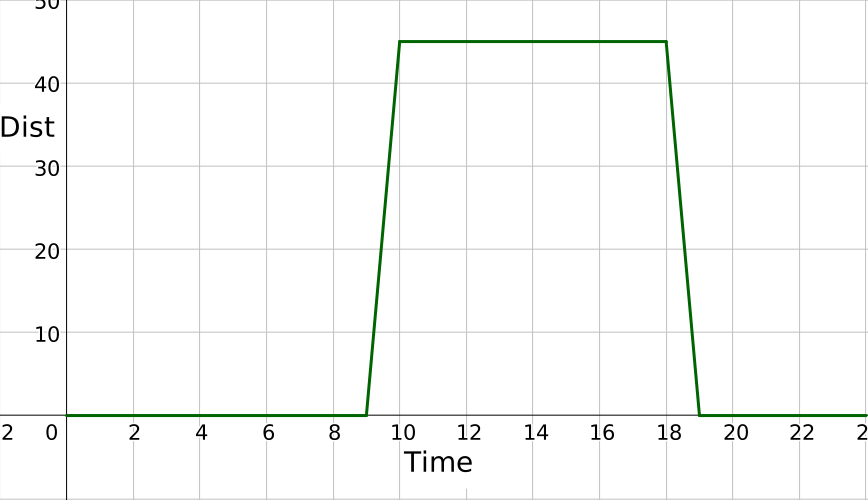
Everyday, Jim drives to work so straight dorsum home. He decided to depict a graph of his distance from home throughout the mean solar day. The graph is in effigy six. Next week, his schedule volition alter and he will have to arrive at work two hours before, just he will also get to go domicile 2 hours earlier at the end of the day. Sketch a graph of the office representing Jim'southward distance from home during the new schedule.
Solution
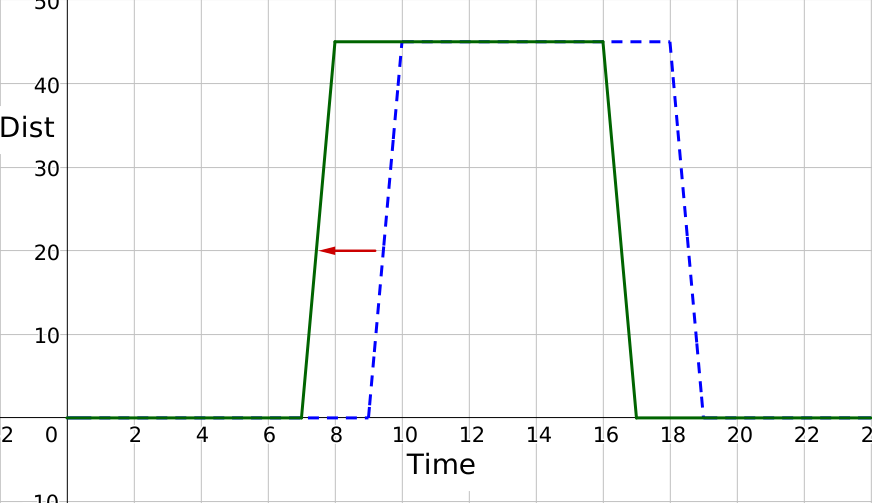
Considering he will travel 2 hours earlier, the graph will interpret two places to the left. Phone call the original schedule function one-time(x) and the new schedule new(x). The input will need to be increased by 2. He was leaving at nine AM, at present he is leaving at 7 AM. So the leaving altitude is 0 = old(nine) originally. Now the leaving distance is 0 = new(7). Since these are both the same leaving distance, and then they are equal. old(9) = new(seven), thus we have to add together ii to the input of new to make information technology equal old. If the old function was y = f(x), then the new function will be y = f(x + 2).
Analysis
Annotation that f(x + ii) has the effect of shifting the graph to the left.
Horizontal changes or "inside changes" affect the domain of a function (the input) instead of the range and often seem counterintuitive. The new function new(x) uses the aforementioned outputs every bit old(t), but matches those outputs to inputs ii hours before than those of old(x). Said another style, we must add ii hours to the input of old to find the corresponding output for new: new(x) = old(ten + 2).
Instance 3: Writing Equation of a Translation
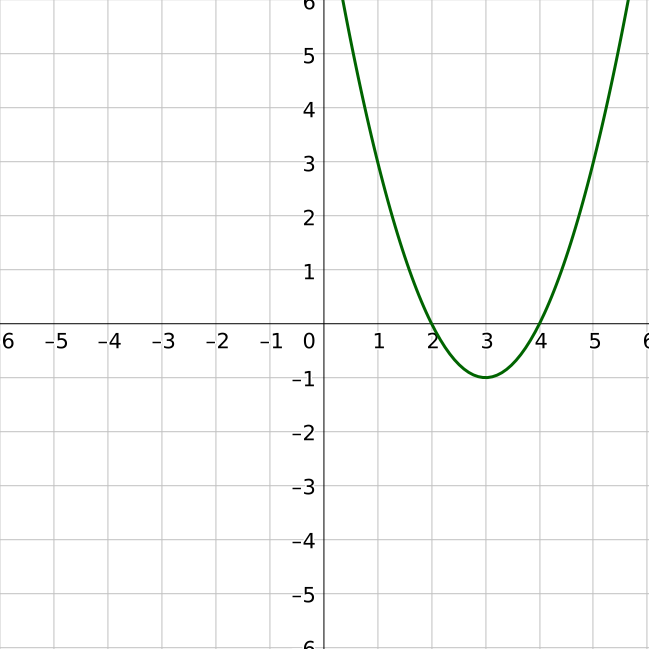
Figure eight represents a transformation of the parent function f(ten) = x two. Relate this new function g(x) to f(x), and then find a formula for g(ten).
Solution
Notice that the graph is identical in shape to the f(x) = x 2 function, merely the it is translated 3 to the right and i downwards. The vertex used to be at (0, 0), only now the vertex is at (three, −1). The graph is the basic quadratic function translated iii units to the right and 1 downwardly, so thou(x) = f(x − 3) − 1. This would become g(x) = (10 − 3)2 − one.
Endeavor It 1
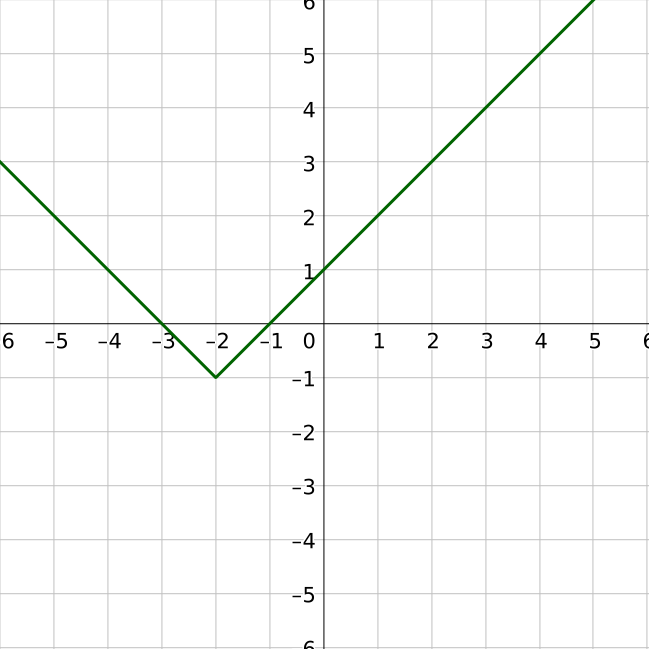
Given f(x) = |10|, sketch a graph of h(x) = f(x + 2) − one.
Answer
Attempt It ii
Write an equation for a transformation of the parent reciprocal function \(f(x) = \frac{1}{x}\) that translates the function'southward graph one unit of measurement to the correct and one unit upwardly.
Reply
\(f(10) = \frac{1}{ten - one} + 1\)
Example iv: Interpreting Horizontal versus Vertical Shifts
The role G(m) gives the number of gallons of gas required to drive m miles. Translate One thousand(g) + 10 and Grand(m + 10).
Solution
G(m) + 10 is calculation 10 to the output, gallons. This is the gas required to drive m miles, plus another 10 gallons of gas. The graph would indicate a vertical shift.
G(m + 10) is adding 10 to the input, miles. And so this is the number of gallons of gas required to drive 10 miles more than than chiliad miles. The graph would bespeak a horizontal shift.
Reflections
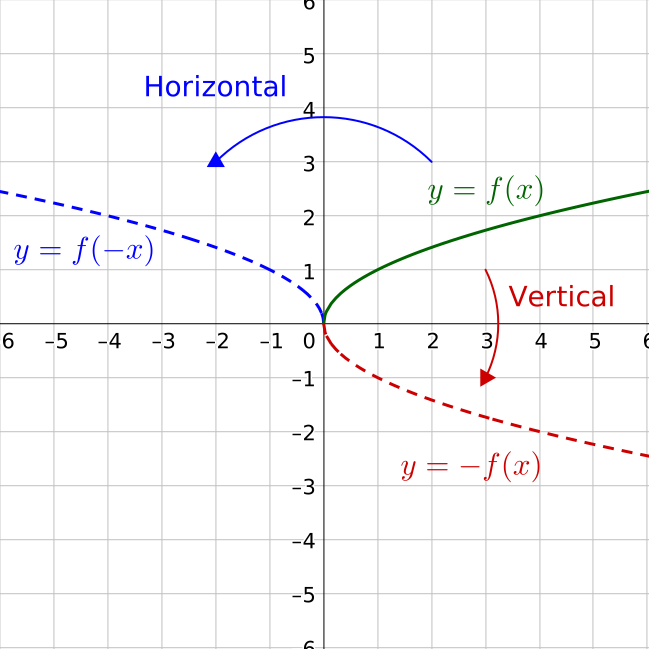
Another transformation is a reflection. A horizontal reflection reflects the graph over the y-axis, and a vertical reflection reflects the graph over the 10-axis. This is accomplished by moving all points the same altitude every bit the point is from the centrality to the opposite side of the axis. A horizontal reflection will have the same y-values, merely the x-values will accept the opposite sign, then y = f(−x). A vertical reflection will have the same x-values, but the y-values will have the opposite sign, so y = −f(x).
Reflections
- Horizontal Reflection: y = f(−ten) reflects over the y-axis.
- Vertical Reflection: y = −f(x) reflects over the x-axis.
Example 7: Reflecting a Graph
Reflect the graph of f(x) = |x| (a) vertically and (b) horizontally.
Solution
-
Reflecting the graph vertically means that each output y-value will exist reflected over the horizontal 10-axis every bit shown in figure 10.
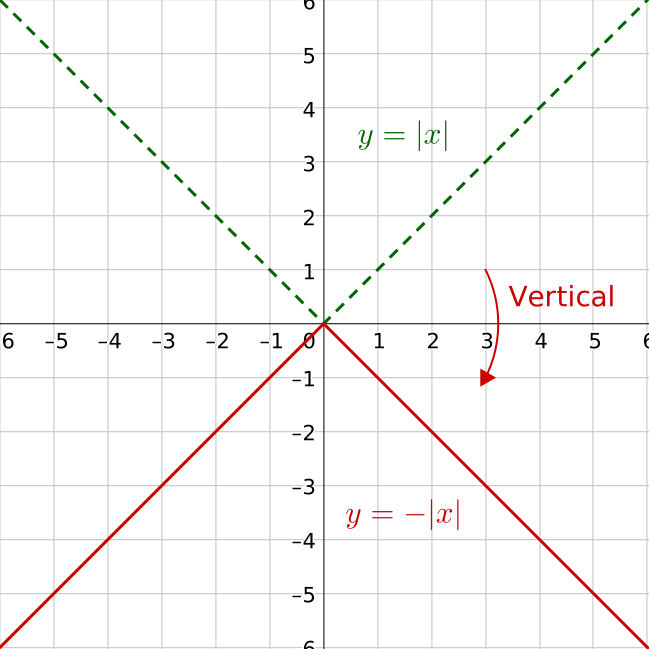
Effigy ten: Vertical reflection of the absolute value part Because each y-value is the opposite of the original y-value, the new role is v(10) = −f(x). (v was chosen for 5ertical).
v(x) = −|x|
Notice that this is an outside alter, or vertical, that affects the output f(ten) values, and so the negative sign belongs outside of the function.
-
Reflecting the graph horizontally means that each input x-value will exist reflected over the vertical y-axis as shown in figure 11.
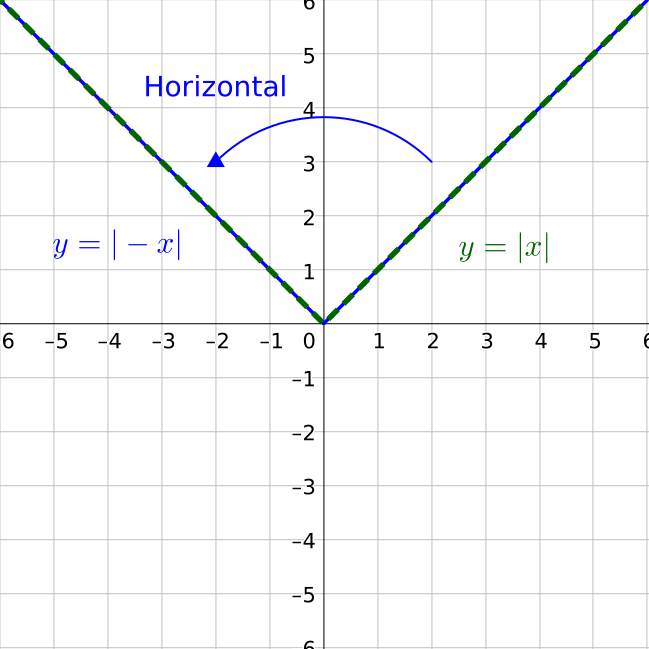
Figure 11: Horizontal reflection of the absolute value function Because each x-value is the contrary of the original x-value, the new function is h(x) = f(−x). (h was chosen for horizontal).
h(ten) = |−x|
Notice that this is an inside change, or horizontal, that affects the input values, and so the negative sign is on the inside of the office.
Endeavour It 3
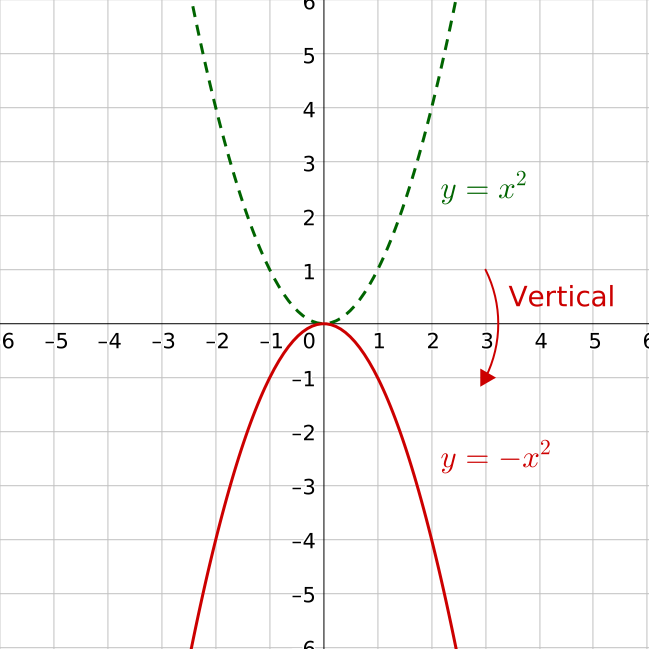
Given the parent function f(ten) = x 2, graph g(x) = −f(10) and h(x) = f(−ten).
Answer
Determining Fifty-fifty and Odd Functions
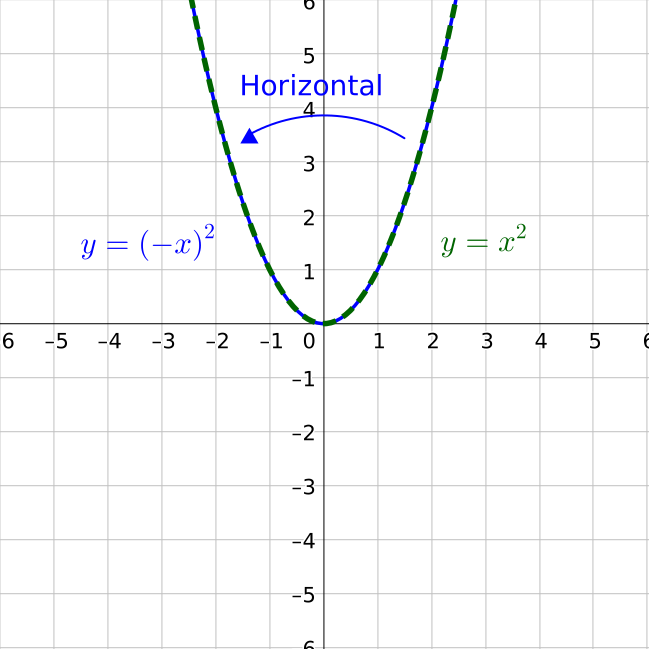
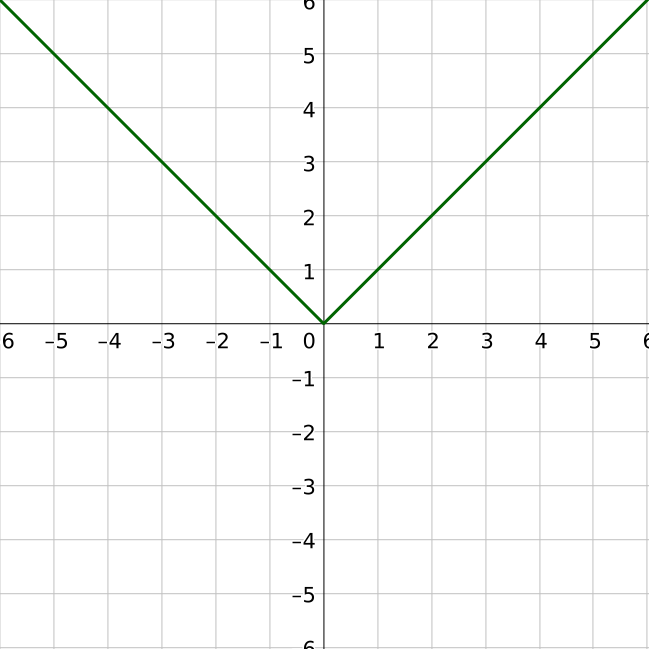
Some functions take symmetry where reflections are the same as the original graph. For the example, the horizontal reflection over the y-axis of the absolute value function in figure 11 results in a graph that is the same as the original graph. Graphs that are symmetric when reflecting over the y-axis are chosen even functions.
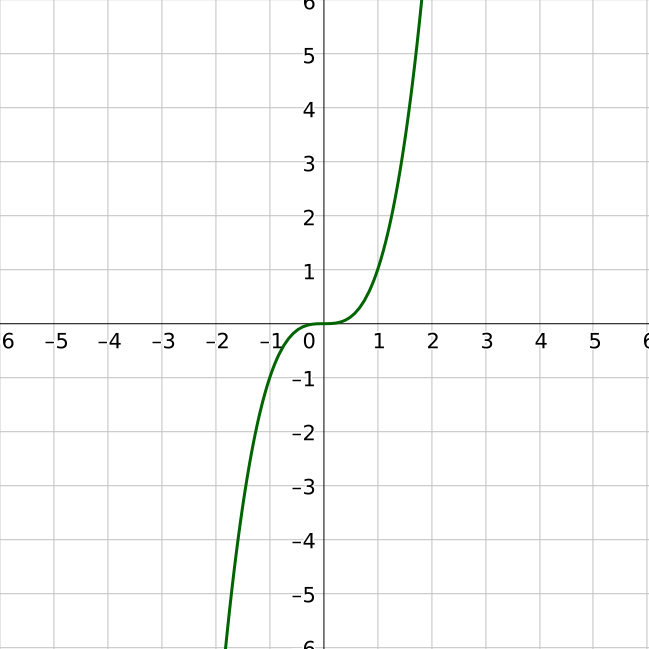
Other functions such as f(x) = x 3 result in the original graph later on reflecting in both the x- and y-axes. Reflecting in the x-axis, then reflecting that in the y-axis is the aforementioned consequence equally a 180° rotation about the origin. Functions that are symmetric subsequently reflecting in both axes, or rotating 180°, are called odd functions.
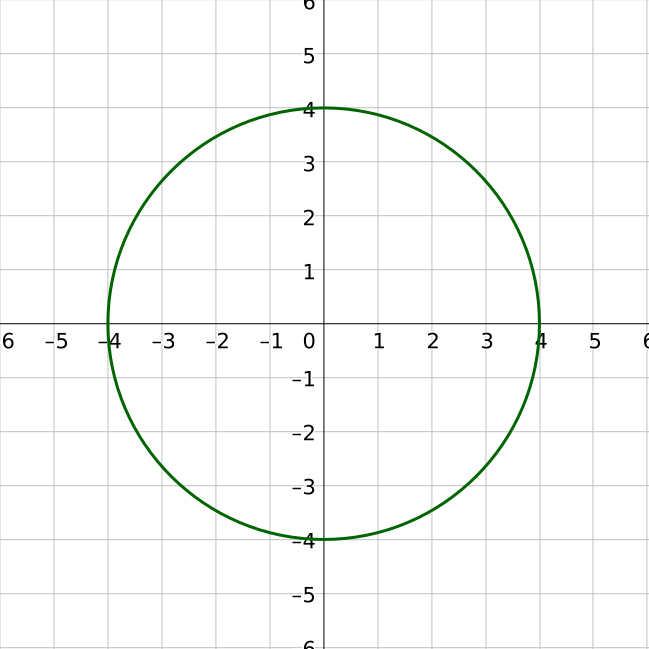
A function tin can be even, odd, both, or neither. Consider a circle with its center on the origin. It is both even and odd. Even so, the square root function is neither even or odd.
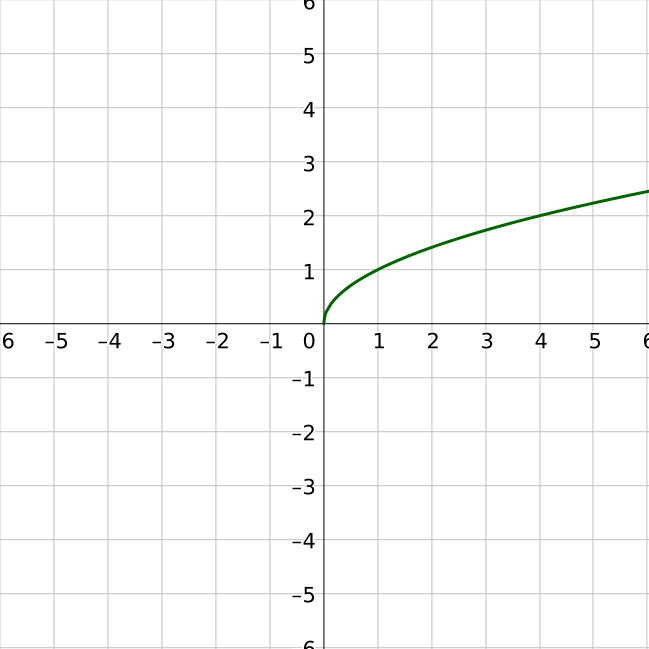
Fifty-fifty and Odd Functions
The graph of an even function is symmetric with a reflection over the y-axis.
The graph of an odd function is symmetric with a 180° rotation about the origin, or reflections in both the x- and y-axis.
Stretches and Shrinks
Translations and reflections moved the graph, but did not change its shape. Stretches and shrinks are transformations that do change the shape by stretching or shrinking the graph in 1 direction. This is washed by multiplying the inputs or outputs by some number.
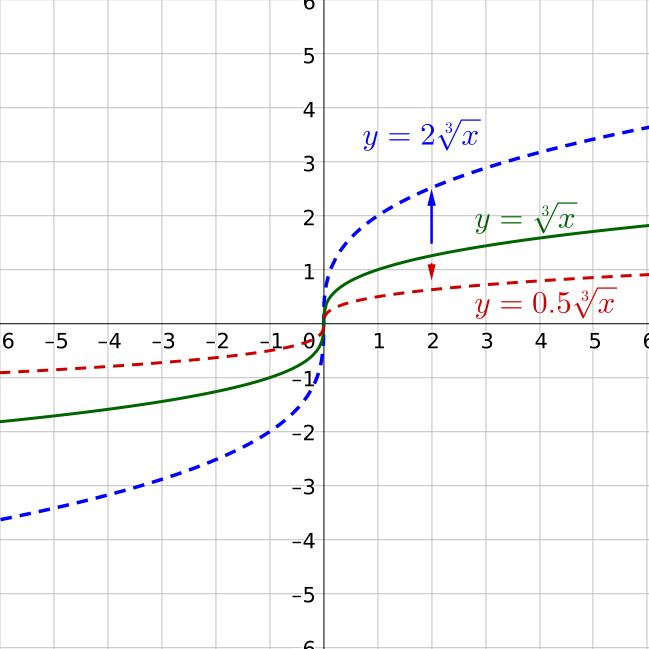
Multiplying the exterior of a part results in multiplying the y-values. Multiplying a function by a number greater than 1 makes the graph taller, or stretched vertically. Multiplying the function by a number between 0 and ane makes the graph shorter, or shrunk vertically. For instance, multiplying the function past 2 would produce a graph that is twice equally tall. Likewise multiplying by 0.five results in a graph that is one-half as tall.
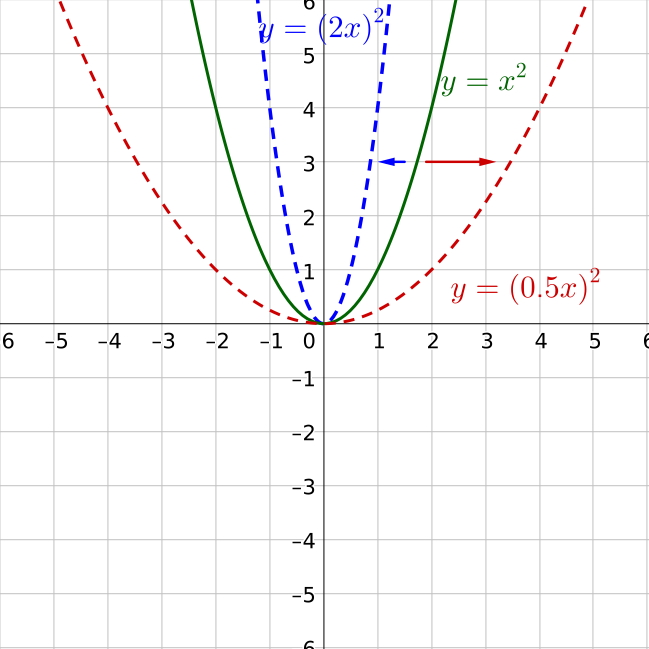
Multiplying the input inside a function results in the contrary of what might exist expected. Multiplying the x by a number greater that 1 makes the graph skinnier, or shrunk horizontally. Multiplying the x by a number betwixt 0 and 1 will make the graph wider, or stretched horizontally. For case, multiplying the input by ii would produce a graph that is half as broad. Only multiplying the input by 0.5 results in a graph that is twice as wide, or stretched horizontally.
Stretches and Shrinks
-
Vertical stretch or shrink occurs when the function is multiplied by a number.
y = af(10)
- If a > 1, vertical stretch
- if 0 < a < 1, vertical shrink
-
Horizontal stretch or shrink occurs when the input is multiplied past a number.
y = f(bx)
- If b > 1, horizontal compress
- if 0 < b < 1, horizontal stretch
Graph a Stretch or Shrink
If y = af(bx), then graph by
- Vertical: Multiply all y coordinates by a
- Horizontal: Multiply all x coordinates by \(\frac{1}{b}\)
Example 8: Graphing a Vertical Stretch or Shrink
The part B(t) models the population of a certain bacteria in a petri dish. The graph is shown in figure 17.
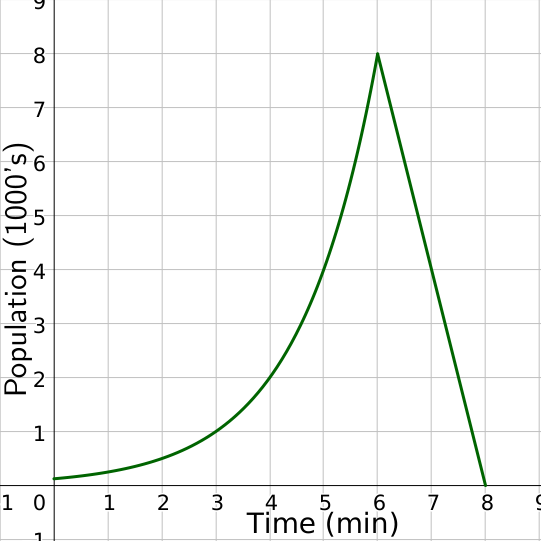
A scientist is comparing this population to some other population, C, whose growth follows the same pattern, but is one-half as large. Sketch a graph of this population.
Solution
Considering the population is always one-half every bit large, the new population'due south output values are e'er one-half the original function's output values. Multiply all the y-values by 1/2 while leaving the t-values the same. This will produce a graph that is half as high which is a vertical shrink.
Choose some user-friendly reference points, (0, 0.1), (3, ane), (4, two), (5, 4), (half dozen, 8), (7, 4), and (8, 0). Then multiply all of the y-values by 2. The following shows where the new points for the new graph will be located.
(0, 0.i) → (0, 0.05)
(3, 1) → (3, 0.5)
(4, 2) → (4, 1)
(five, four) → (v, 2)
(6, 8) → (6, iv)
(7, 4) → (7, two)
(eight, 0) → (8, 0)
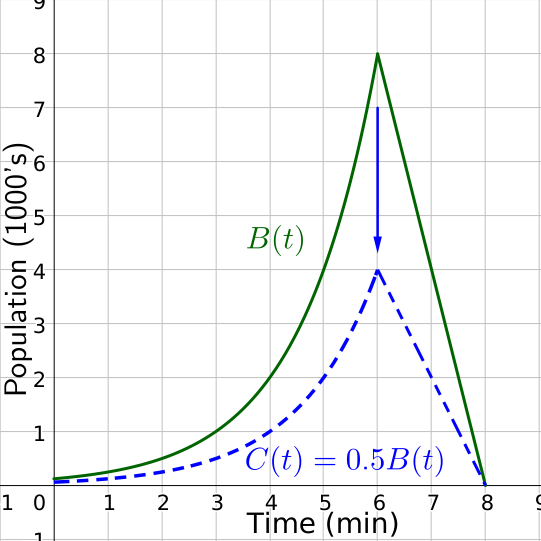
Symbolically, the relationship is written as
C(t) = 0.vB(t)
Try Information technology iv
Write the equation for the part that is the quadratic parent function stretched vertically by a gene of iii, and so translated downward by 4 units.
Answer
y = 3ten 2 − 4
Example ix: Graphing a Horizontal Stretch or Shrink
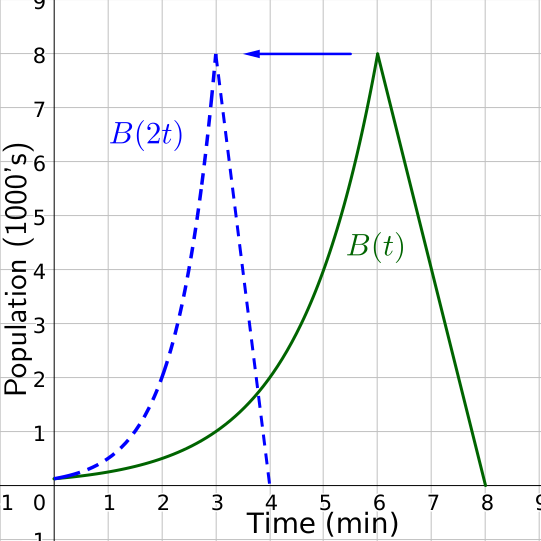
The function B(t) models the population of a certain bacteria in a petri dish. The graph is shown in effigy 19.
Suppose a scientist is comparing a population of bacteria to a population that progresses through its lifespan twice as fast every bit the original population. In other words, this new population, D, will progress in ane infinitesimal the same amount as the original population does in two minutes, and in two minutes, it will progress as much every bit the original population does in four minutes. Sketch a graph of this population.
Solution
Because the time is cut in half, the description is a horizontal shrink past a factor of 1/2. This means we want D(2) = B(4) and D(3) = B(6). In general that means that D(x) = B(2x). Remember that a horizontal stretch or shrink is by a gene of \(\frac{ane}{b}\). In this case, the horizontal shrink factor is \(\frac{1}{2}\), so b = 2.
Attempt It v
Write an equation for the parent cubic function horizontally stretched by a factor of 3.
Answer
\(y = \left(\frac{1}{3}x\right)^three\)
Combinations of Transformations
When combining transformations, information technology is very of import to consider the order of the transformations. For example, vertically transforming by 3 and then vertically stretching by 2 does not create the same graph as vertically stretching by 2 and and then vertically translating by iii. This is because when the translation is first, both the original function and the translation go stretched, while only the original function gets stretched when the stretch is first.
In general, follow the society of operations to decide the order of transformations. The multiplying for the reflections, stretches, or shrinks should come before the addition for translations.
Horizontal transformations are a little counterintuitive to think most. With the function m(ten) = f(2x + 3), for instance, retrieve most how the inputs to the role g chronicle to the inputs to the function f. Suppose f(seven) = 12. What input to g would produce that output? In other words, what value of ten volition allow g(x) = f(210 + 3) = 12? So 2x + 3 = 7. To solve for x, first decrease 3, resulting in a horizontal translation, and then divide by 2, causing a horizontal shrink.
This format ends up beingness very difficult to work with, because information technology is normally much easier to horizontally stretch a graph before translating. This tin can be stock-still by factoring inside the function.
$$ f(bx + h) = f\left(b \left(x + \frac{h}{b}\right)\right) $$
Hither is an example.
$$ f(x) = (2x + 5)^2 $$
Factor out the ii.
$$ f(ten) = \left(2\left(x + \frac{5}{2}\correct)\right)^two $$
Now the order of functioning can be followed. First practice the horizontal compress by a factor of i/2, then the horizontal translation to the left of 5/2.
Combining Transformations
- When combining vertical transformations written in the form af(ten) + k, first vertically stretch by a and then vertically translate past k.
- When combining horizontal transformations written in the class f(bx + h), first horizontally translate by h and then horizontally stretch by \(\frac{one}{b}\).
- When combining horizontal transformations written in the grade f(b(10 + h)), first horizontally stretch past \(\frac{i}{b}\) and then horizontally translate by h.
- Horizontal and vertical transformations are independent. Information technology does not thing whether horizontal or vertical transformations are performed first.
Example 10: Combining Transformations
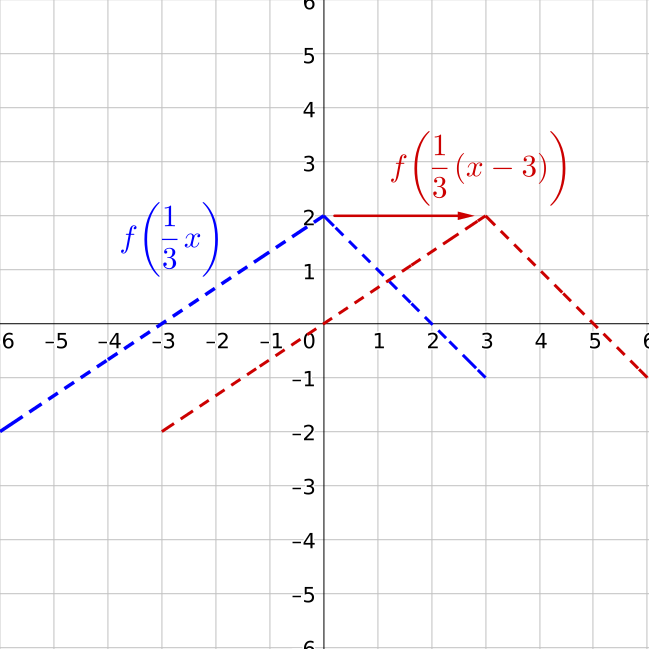
Apply the graph of f(x) in figure 21 to sketch a graph of \(chiliad(x) = f\left(\frac{ane}{3}x - 1\right) - 2\).
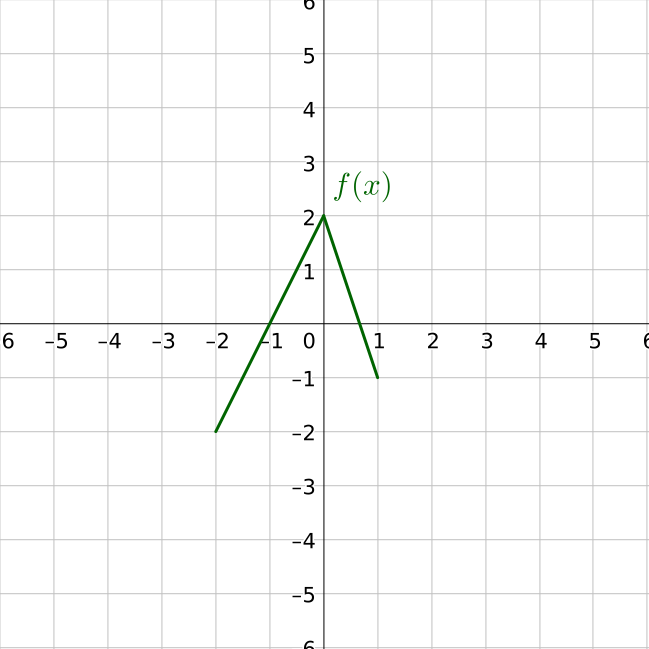
Solution
To simplify the process, start past factoring out the inside of the function.
$$ f\left(\frac{1}{3}x - i\right) - 2 $$
$$ f\left(\frac{1}{3}\left(x - 3\right)\right) - 2 $$
Now graph by applying the stretch first. It is a horizontal stretch by a factor of 3 because the b is \(\frac{one}{3}\) and the horizontal stretch is by the gene of \(\frac{1}{b}\).
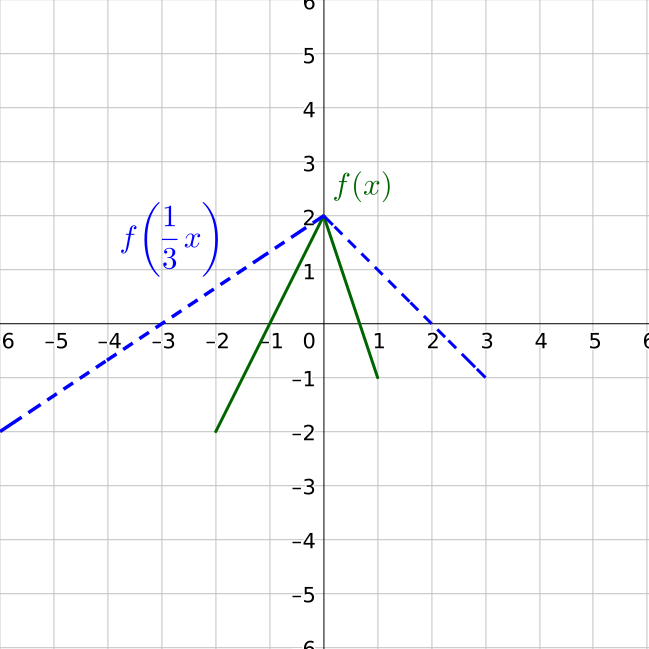
Adjacent, horizontally interpret right by three units, equally indicated by x − iii.
Concluding, vertically interpret down by 2, equally indicated by the −2 on the exterior of the function.
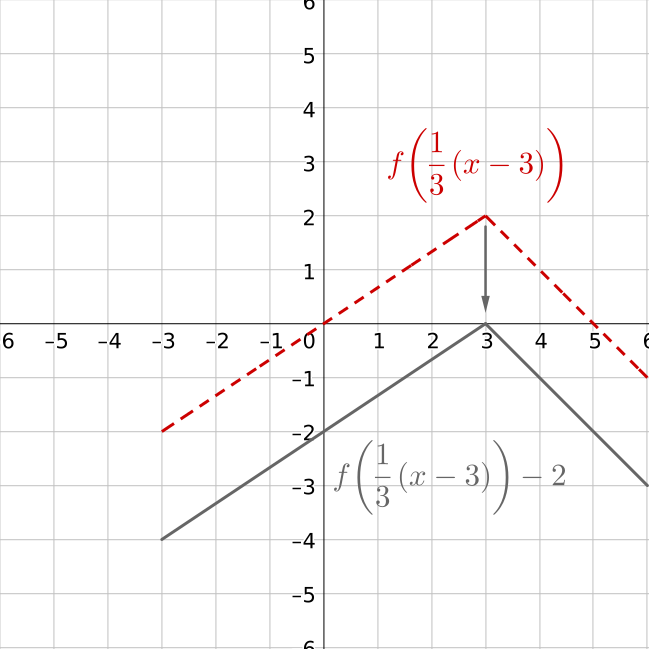
Note: Often, the horizontal and vertical translations are done together in one step.
Attempt It half-dozen
Use the graph of f(x) in figure 25 to sketch a graph of \(y = -2 f\left(x\correct) + ane\).
Answer
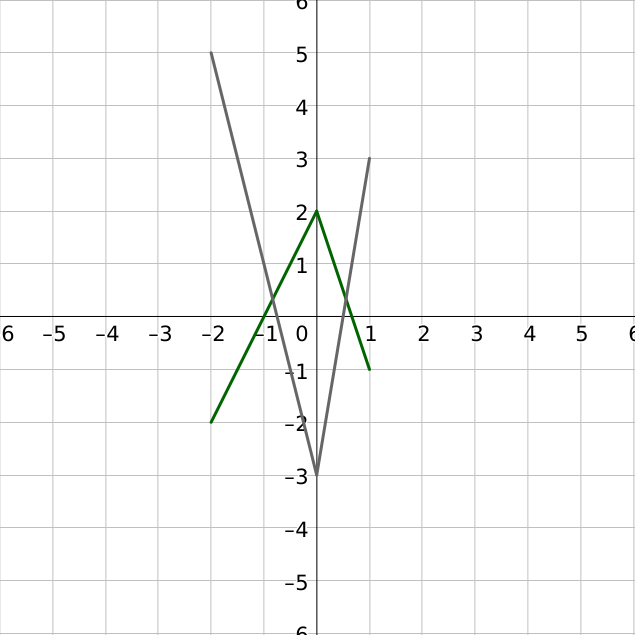
Lesson Summary
Transformations
For functions written every bit y = af(b(x − h)) + k
- a is vertical stretch/shrink/reflection
- If a > 1, then vertical stretch by factor of a.
- If 0 < a < ane, then vertical shrink past gene of a.
- If a is −1, then vertical reflection over the x-centrality.
- b is horizontal stretch/shrink/reflection
- If b > 1, and so horizontal shrink past factor of \(\frac{1}{b}\).
- If 0 < b < one, then horizontal stretch past factor of \(\frac{ane}{b}\).
- If b is −1, and so horizontal reflection over the y-centrality.
- h is horizontal translation
- If h > 0, then translates right.
- If h < 0, then translate left.
- one thousand is vertical translation
- If thou > 0, so translates upward.
- If k < 0, then translate down.
The inside may need to exist factored to put it in this course.
Graphing Transformations
- When combining vertical transformations written in the form af(x) + one thousand, get-go vertically stretch past a then vertically translate by 1000.
- When combining horizontal transformations written in the form f(b(x + h)), starting time horizontally stretch by \(\frac{1}{b}\) and and then horizontally translate by h.
- Horizontal and vertical transformations are independent. It does not matter whether horizontal or vertical transformations are performed commencement.
Practice Exercises
- Write an equation for the office obtained when the graph of f(x) = |x| is translated left three units and to the up 1 unit.
- Write an equation for the part obtained when the graph of \(f(x) = \frac{one}{10^2}\) is translated correct 2 units and to the downward 4 units.
- y = f(x − fifteen)
- y = f(x + 1)
- y = f(x) + 17
- y = f(x) − xx
- y = f(x + 2) + four
- h(ten) = 2 x − 1 − 3
- f(t) = (t − 1)two − 2
- 1000(x) = (x + two)three − ii
-
-
-
-
-
- The graph of \(f(x) = \sqrt{x}\) is reflected over the x-axis and horizontally shrunk by a factor of \(\frac{ane}{3}\).
- The graph of f(x) = x 2 is vertically shrunk by a gene of \(\frac{1}{2}\), then shifted to the right ii units and down iii units.
- g(x) = iii(x − one)two − 6
- h(x) = −|iiten − four| + iii
- \(a(x) = -\sqrt{-10 + 2}\)
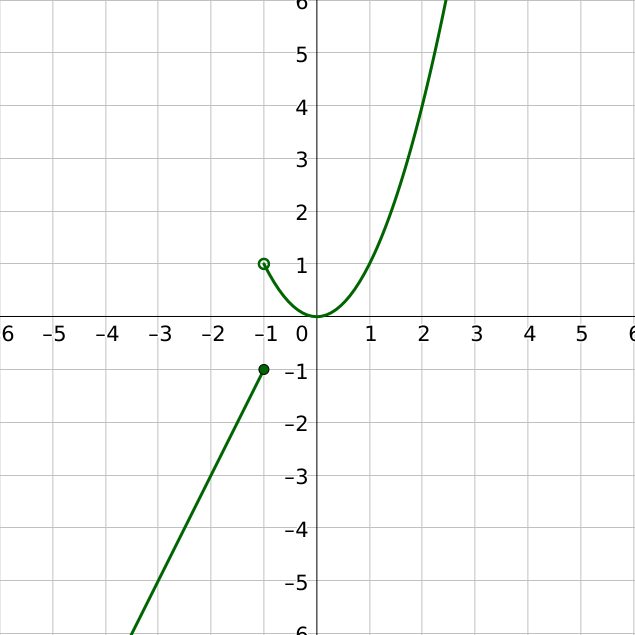
- (01-06) Graph \(f(x) = \left\{\begin{marshal} 2x + 1 &, \text{ if } x ≤ -ane \\ x^2 &, \text{ if } ten > -ane \end{align}\right.\)
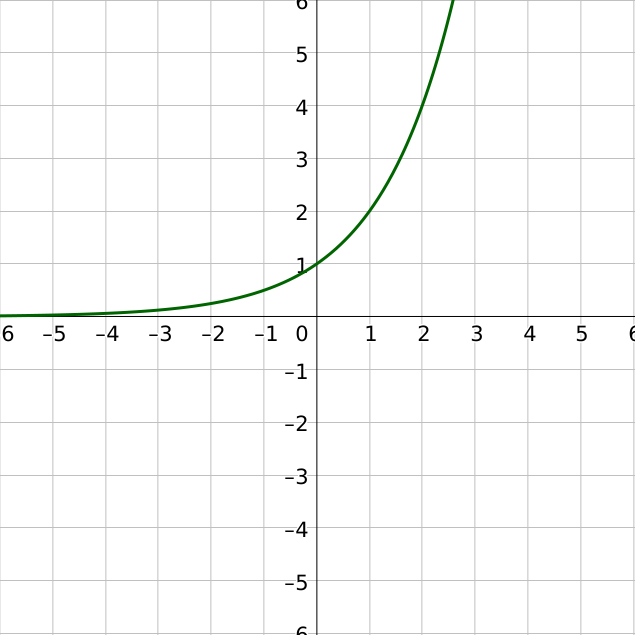
- (01-05) Find the domain and range for the function, f(10) = 2 10 , in figure 26.
- (01-04) Find the domain of \(m(x) = \frac{1}{2}10^two + 5\).
- (01-03) Graph \(y = \frac{2}{3}x - ane\).
- (01-01) Observe the distance and midpoint betwixt (−one, −two) and (v, six)
Describe how the graph of the function is a transformation of the graph of the original office f.
Utilize the graph of f(ten) = 2 ten shown in figure 26 to sketch a graph of each transformation of f(ten).
Sketch a graph of the office as a transformation of the graph of i of the parent functions.
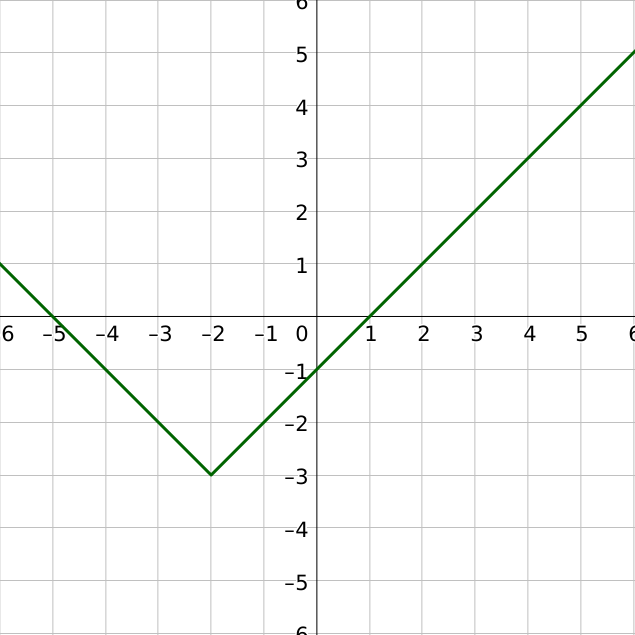
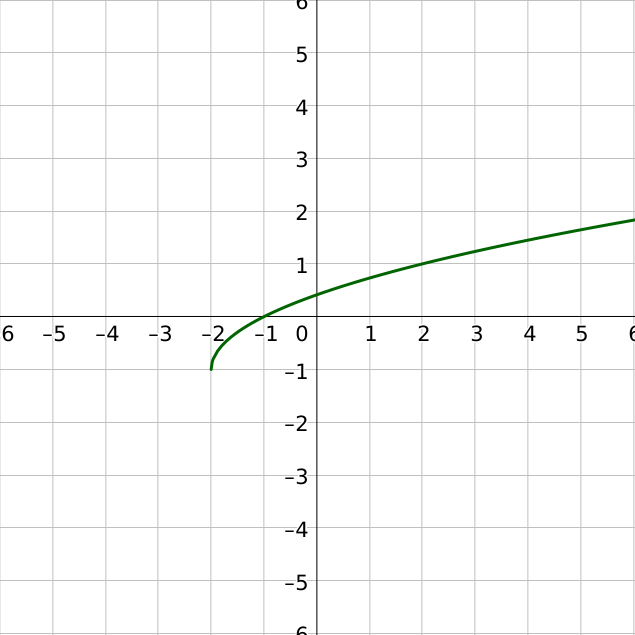
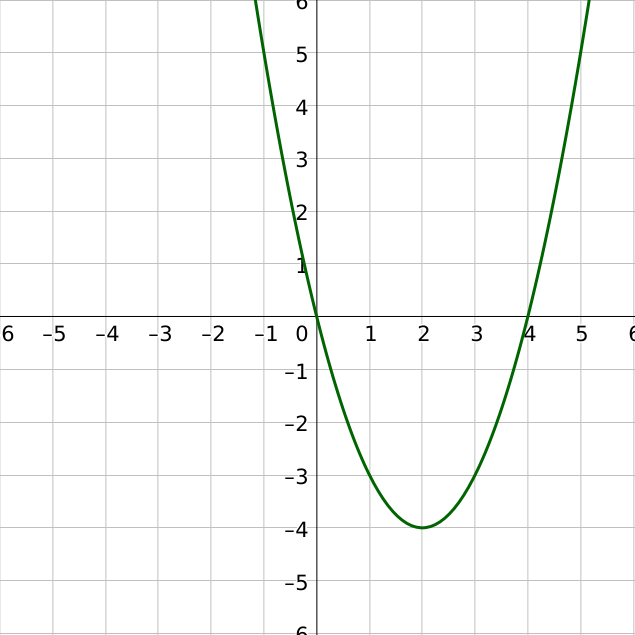
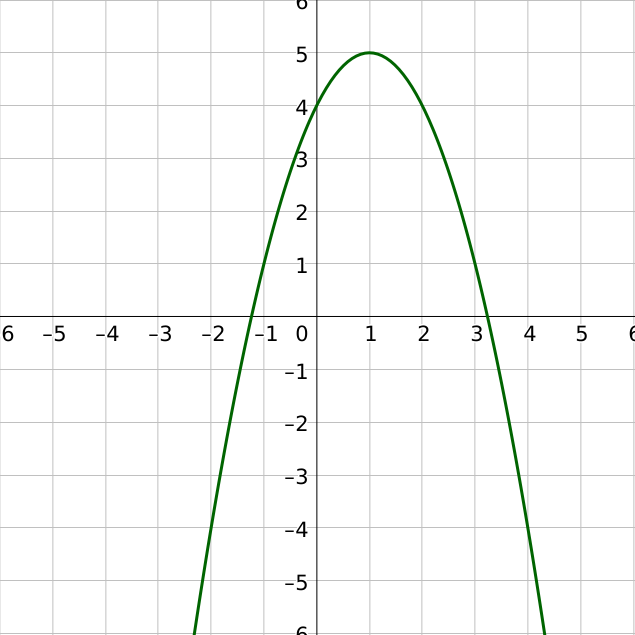
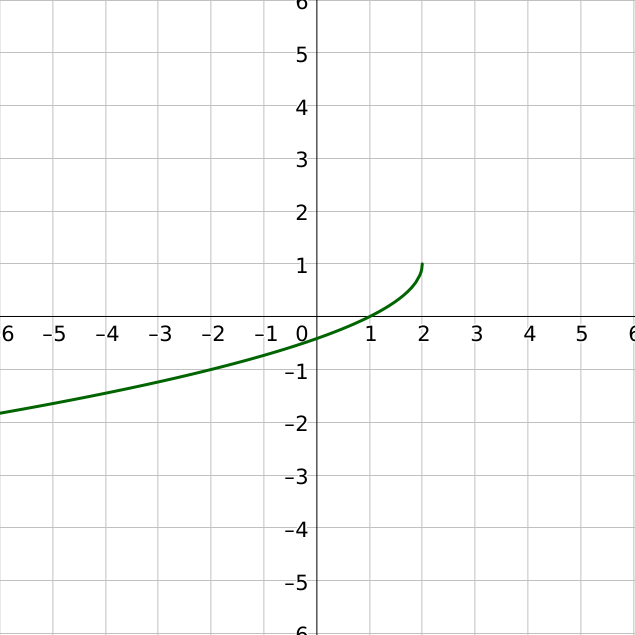
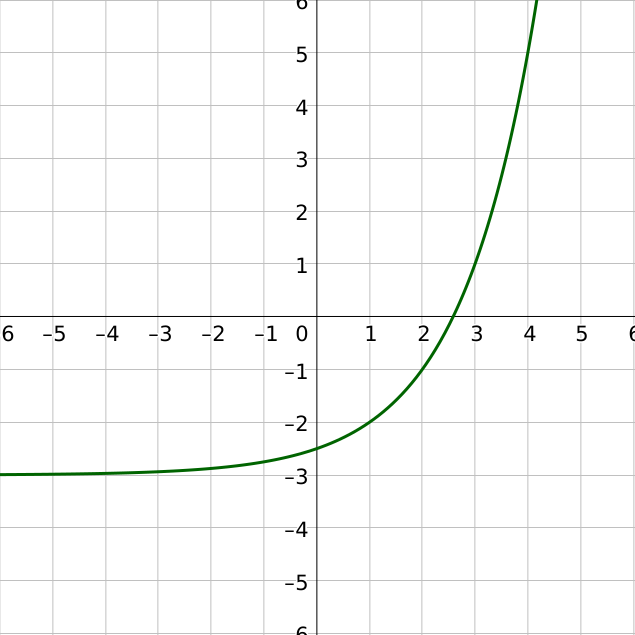
Write an equation for each graphed function past using transformations of the graphs of 1 of the parent functions.
Write a formula for the function thou that results when the graph of a given parent function is transformed every bit described.
Describe how the given office is a transformation of a parent office. Then sketch a graph of the transformation.
Mixed Review
Answers
- y = |x + 3| + 1
- \(y = \frac{1}{(x - 2)^2} - 4\)
- Translated correct 15
- Translated left 1
- Translated upward 17
- Translated downwardly twenty
- Translated left two and up 4
-
-
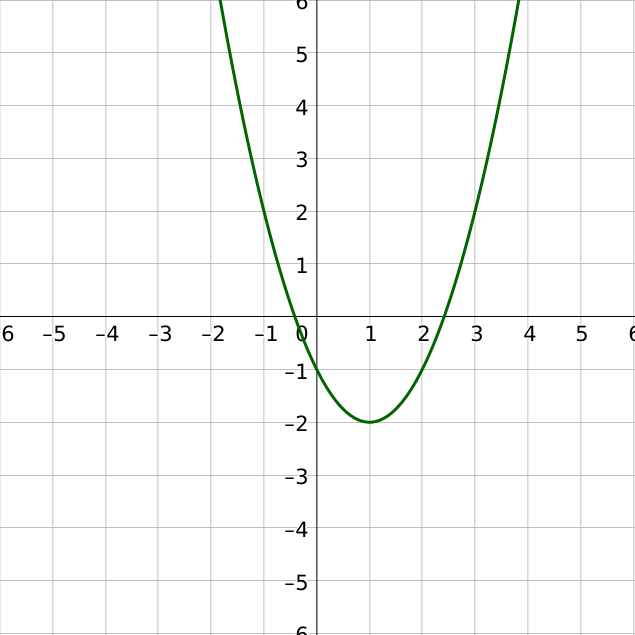
-
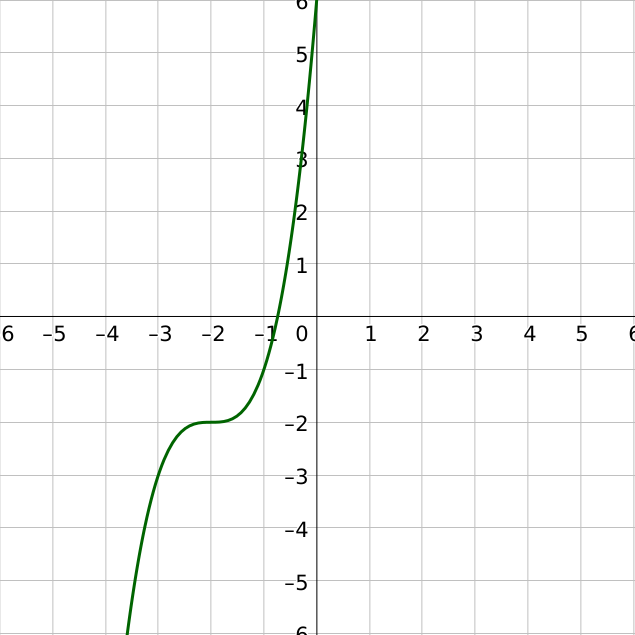
- y = |x + 2| − iii
- \(y = \sqrt{x + 2} - one\)
- y = (x − two)2 − iv
- y = −(10 − 1)ii + 5
- \(y = -\sqrt{-x + 2} + 1\)
- \(y = -\sqrt{3x}\)
- \(y = \frac{one}{2}(x - ii)^ii - iii\)
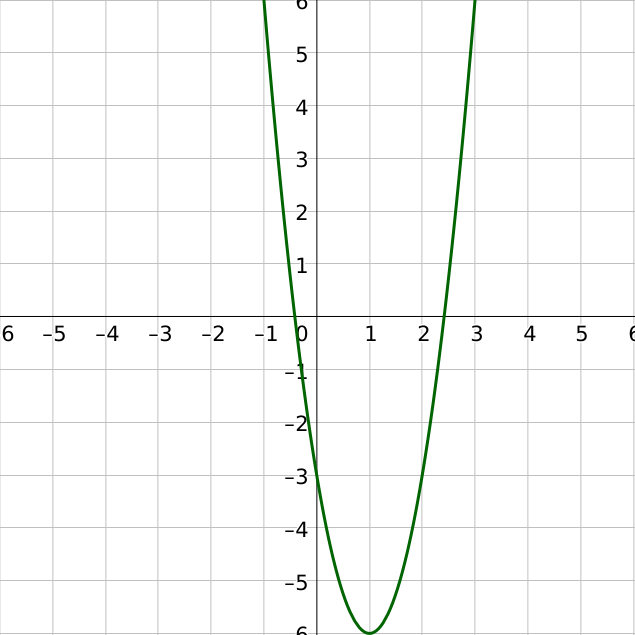
- Stretched vertically by factor of 3, translated right 1 and down 6;
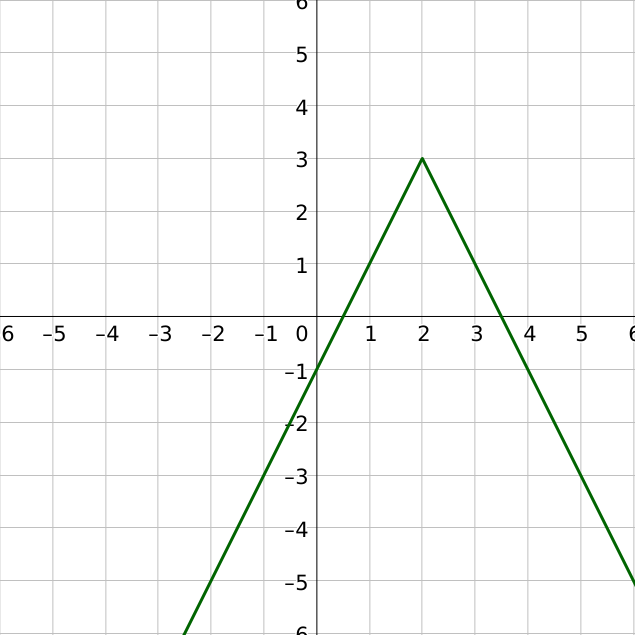
- Reflected over x-centrality, horizontally shrunk by factor of one/2, translated correct two and up three;
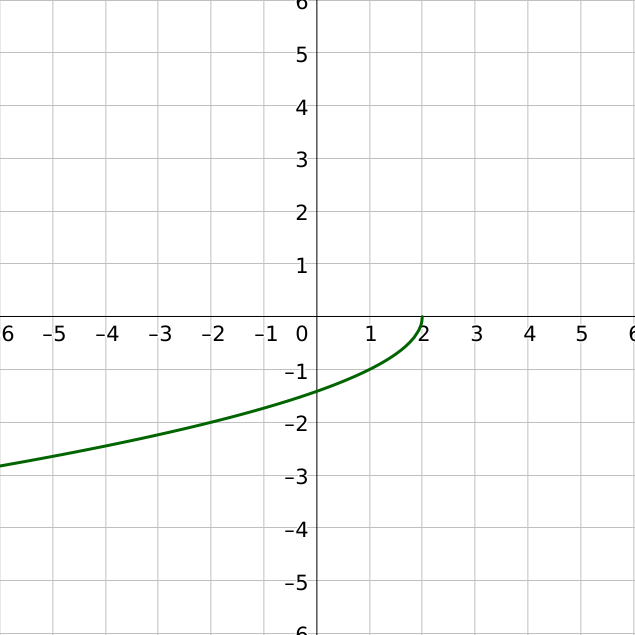
- Reflected over the y-centrality, reflected over the x-centrality, shifted correct two;
-
- Domain: (−∞, ∞); Range: (0, ∞)
- (−∞, ∞)
-
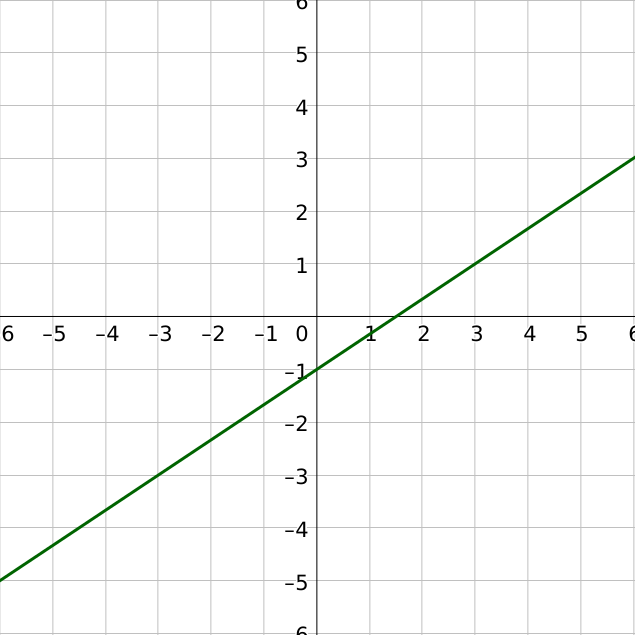
- 10, (2, 2)
beasleywhissilther1936.blogspot.com
Source: https://www.andrews.edu/~rwright/Precalculus-RLW/Text/01-07.html
0 Response to "What Transformations Change the Graph of F(X) to the Graph of G(X) F(X)=x^2 G(X)=(X+3)^2-7"
Post a Comment